



 |
Archival Recordings from 2008 |
|
|
Roberto Magris: piano (I) |
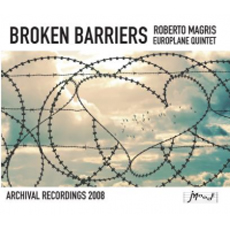
Roberto Magris Europlane Quintet
Broken Barriers
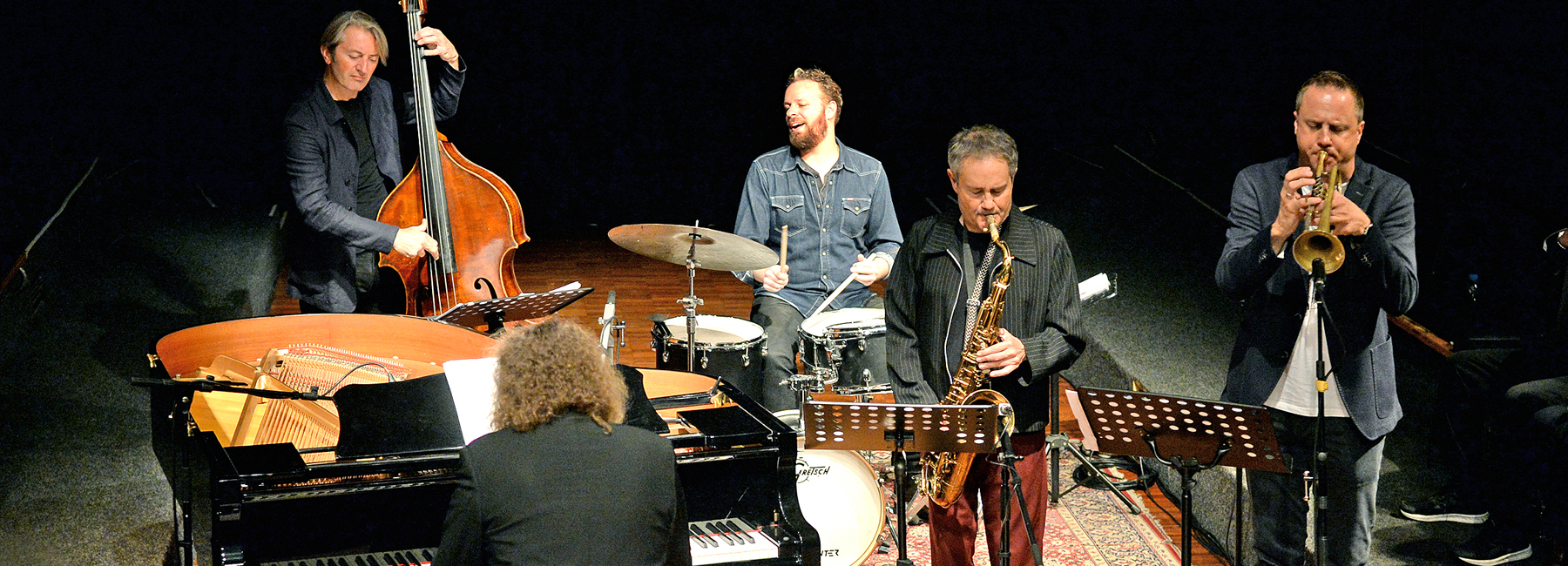
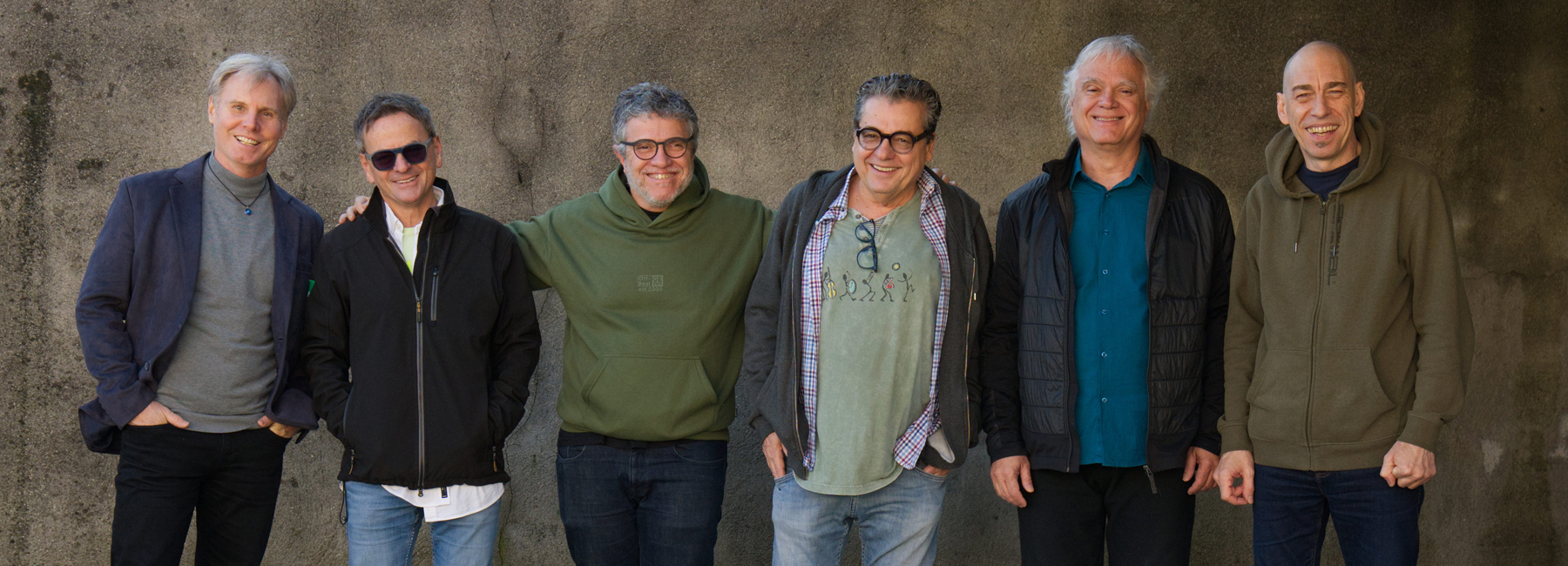
Leave it to this band of European jazz veterans, whose combined bandstand experience is on par with many of their American counterparts, to bring all of their collective powers of swing to bear on this scintillating live set. A document of their performance at the State Music School in Bad Ischl, Austria on March 13, 2008 (part of a concert series entitled “Jazz in & from the Monarchy” during the State Exhibition Year), this archival recording captures Roberto Magris’ signature band Europlane in full flight.
With the Italian pianist-composer-leader alongside a potent crew of Hungarian tenor saxophonist Tony Lakatos, Austrian alto saxophonist Florian Bramböck, and the superb Slovenian rhythm tandem of drummer Drago Gajo and stalwart bassist Nikola Matošič, this edition of Europlane (a group he formed in 1998 with the mission of culturally re-connecting the western and eastern European countries after the end of the iron curtain and within the new enlarged European Union) deftly executes three Magris originals while breathing new life into three familiar jazz standards on Broken Barriers.
The title of Magris’ 34th album as a leader also carries some political connotations, as he explained: “In these present days, when some borders have unexpectedly returned in Europe and ‘they’ want to make borders and divisions again...even wars…this CD title is even more a declaration of freedom, saying, ‘Let’s break those borders! and not re-build them again!’ As we don’t have to and don’t need to seek for enemies!”
He added, “When we played and recorded this concert in 2008, we were in the direction of completely removing the borders in all the European countries and getting a common freedom and openness among us in the new EU, including western and eastern countries. Now we need to stand up for this again, as we don’t want to step back.”
They open their live set on a lightly swinging note with Magris’ engaging waltz-time number, “Optional Man,” a tune he had previously recorded with a different lineup on 2010’s Mating Call. Bramböck, a longtime member of the Vienna Art Orchestra, solos first on alto, gradually building to some Sonny Stitt-like heights marked by some daredevil double-timing and high register wailing before taking it ‘out’ near the end of his solo. Lakatos enters with some effortless flurries on tenor before settling into a robust solo showcasing his sheer Breckerian command of his horn. Magris follows that Herculean display with a solo that is decidedly old school, in the vein of his pianistic heroes like Tommy Flanagan and Horace Silver. Matošič adds a bass solo that is as soulful as it is imaginative. And the tune closes with some cascading flourishes by the leader against a band ostinato.
Next up is the mellow ballad “Theme for Ernie.” A relaxed showcase for Lakatos’ deeply affecting tenor tone and profoundly soulful, even vocal, delivery, it finds Lakatos pouring his heart into this tune written by Fred Lacey and later recorded by John Coltrane on Soultrane, a 1958 Prestige album that, coincidentally, was released a month before Tony Lakatos was born. Bramböck joins in on some intertwining alto sax lines at the 2:30 mark, before Magris adds an expressive piano solo that shifts back and forth from unabashed romanticism to splintered Monkisms. Lakatos returns for a superb tenor solo that is adventurous and teeming with discovery along the way before returning to the brooding theme and ending with a stirring tenor cadenza.
From there they dive into some deep waters on John Coltrane’s “Village Blues” (from 1961’s Coltrane Jazz). With Matošič’s insistent bass line setting the tone and Gajo underscoring with loosely interactive, hip fills, the leader reverts to his McCoy Tyner mode on piano. Said Magris of his unerring rhythm tandem: “Nikola and Drago are from Ljubljana, Slovenia, which is just one hour drive from my hometown of Trieste. They are best friends and partners of mine for a long time now. Drago is considered an historical name for jazz in Slovenia, since the times of the former Yugoslavia when he was one of the first Slovenian musicians performing on the European jazz scene (he also recorded with Woody Shaw). Since 1994 (without breaks until now) he has run the Jazz Club Gajo in Ljubljana, which is the most famous jazz venue in Slovenia. I’ve played in his club so many times and it was there that I met Nikola, who was the house bassist and took care of organizing the jam sessions for many years. Along the years, Nikola has become one of my favorite bassists in Europe and I had him in my trio when I toured and recorded with Herb Geller (An Evening with Herb Geller & The Roberto Magris Trio – Live in Europe 2009 and Herb Geller/Roberto Magris – Come Lately).”
Bramböck solos first on “Village Blues,” taking his time on alto sax before erupting with some high register blues-tinged wailing on his horn. Magris’ piano solo on this open-ended modal piece finds him channeling his inner McCoy, providing strong left-hand statements while layering on cascading lines with the right. Lakatos then solos on soprano sax, searching while building to some stratospheric heights. Matošič follows with an earthy bass solo that grounds the proceedings.
Their version of J.J. Johnson’s luxurious ballad “Lament” (introduced on his 1954 Savoy album Jay & Kai with trombone partner Kai Winding and famously covered by Miles Davis on his 1957 collaboration with Gil Evans, Miles Ahead) is rendered here with a bossa nova lilt to it. Lakatos solos first on tenor and just tears it up, blowing with intense abandon. Magris follows with a tasteful piano solo with a dash of Ahmad Jamal’s elan before he builds to ecstatic two-fisted summit. Bramböck then delivers a potent alto sax full of double-timed exclamations and brimming with Bird-like abandon. Matošič’s bass solo brings the dynamic down to an intimate trio setting, and they close out saxes harmonizing on the familiar head, underscored by Gajo’s bossa pulse on the kit.
The briskly swinging title track features both saxophonists on soprano. Piano solos first, and Magris stretches to the max, dropping in little atonal statements through the course of his stellar improvisation, revealing the influences of pianistic role models Herbie Nichols, Andrew Hill and Don Pullen along the way. Bramböck solos next, soaring freely over the changes and surging uptempo groove before Lakatos enters by quoting from Juan Tizol-Duke Ellington’s famous “Caravan” before taking off on a searing solo of his own. Matošiċ adds a deep-toned improvisation before the two sopranos return to the intricate, intertwining head. Propelled by a relentless forward momentum provided by Gajo, a facile and ever-swinging drummer whose role models included Elvin Jones and Tony Williams, this post-boppish burner carries a decided Dolphy-esque edge (think uptempo “Out to Lunch”).
The Europlane Quintet closes out its live set on a calming note with the Magris original “Inner Love.” With Bramböck on soprano sax and Lakatos on tenor, the piece has a more deliberate tone, with each soloist adhering to the harmonic/melodic fabric of the piece while adding in their own personal touches. Lakatos begins his tenor solo with a salute to Saxophone Colossus Sonny Rollins by quoting directly from his “Alfie’s Theme” (from his 1966 Impulse! album). As he digs deeper into his solo, the powerhouse tenorist begins revealing more layers of swagger, eventually touching on the “Alfie” quote once again. Magris’ solo here is slow and deliberate, emphasizing elegance over chops.
“I’ve dedicated myself to building bridges and breaking barriers with this Europlane project,” said Magris. “That is, breaking all the borders and cultural barriers among the European countries, in the spirit of jazz. And also between Europe-US, as a citizen of the world connecting musicians and people of the world.”
His 34th album as a leader goes a long way toward achieving that goal. — Bill Milkowski
Bill Milkowski is a longtime contributor to Downbeat, Absolute Sound and Jazzthing magazines. He is also the author of biographies of Jaco Pastorius, Pat Martino and Michael Brecker. His blog, “The Milkman’s Musings,” can be read on Substack or on his website at billmilkowski.com
A Note from Roberto Magris:
These recordings come from a concert of the Roberto Magris Europlane Quintet in its “k.u.k. Special Version.” To better explain these quite obscure details, the monarchy is the old Absburgic one and “k.u.k.” means that the old king and emperor Franz Josef was the “Kaiser und Koenig” of the Austrian-Hungarian empire; a now strange-sounding way to say that the Austrian-Hungarian empire connected the most of the Central European countries. The Jazzfreunde Bad Ischl and its promoter Emilian Tantana asked me to put together this special version of Europlane including musicians from countries that used to be part of the old Absburgic empire. So I invited Florian from Austria, Tony from Hungary, Nikola and Drago from Slovenia and me from Trieste, which was once one of the prominent cities of the Austro-Hungarian Empire before becoming an Italian city after World War I. So it’s about old stories, heritages, traditions, dreams in this part of Europe. But I can say that people from the countries that used to be part of the Austro-Hungarian monarchy still have many cultural affinities and relationships in common after more than 100 years.
This concert in Bad Ischl was part of a little tour we did in 2008, with concerts also held in Ljubljana, the capital city of Slovenia, and in Vienna. About the tune “Broken Barriers,” I remember that I had composed it specifically for this tour, and I chose that title to express the meaning that we were all together in the same country until the results of World War I divided us, raised new borders. Then we had Nazism, Fascism, Communism, World War II and the Iron Curtain further dividing us and raising political and ideological barriers. But by 2008, we were all together again within the European Union, having 'broken the barriers’ and existing in full peace, freedom and democracy. Unfortunately, today the barriers are back, making our mission with Europlane all the more meaningful.